
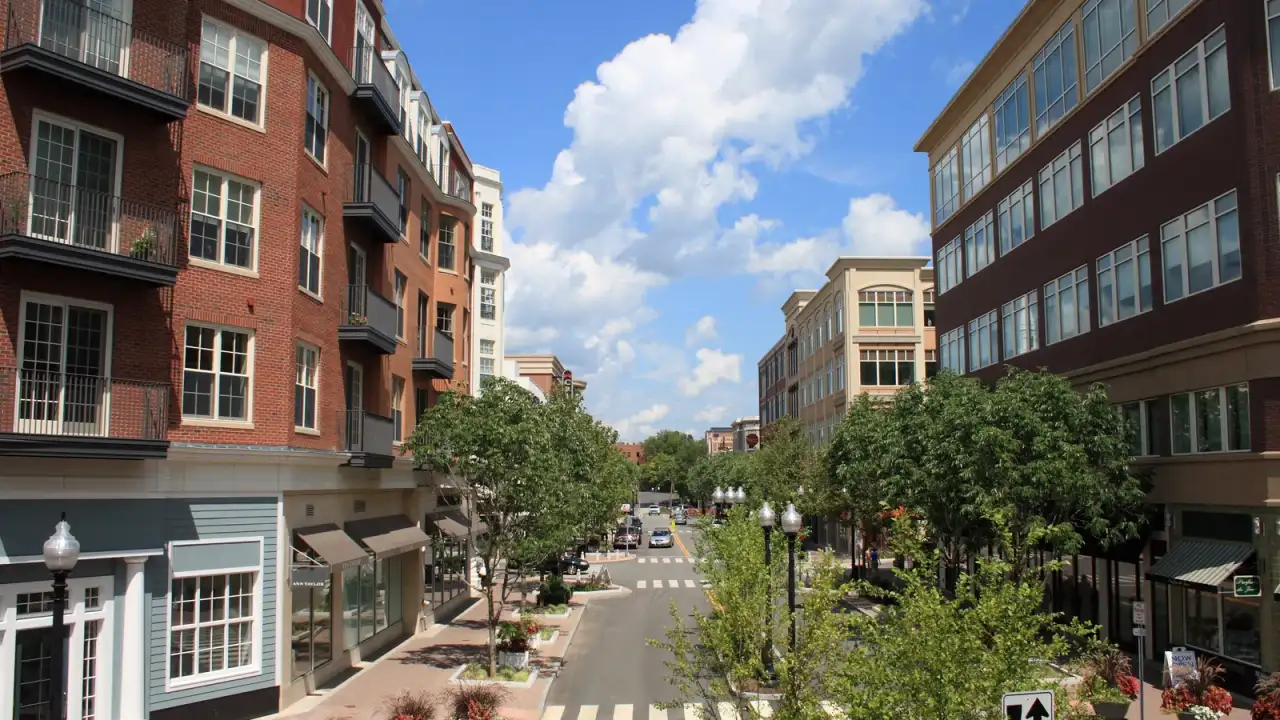
About 5 mi / 12 min west of Hartford. Same-week scheduling for planned repairs, skim work, and finishing; priority visits for sagging or water-stained ceilings, which we treat as urgent.
Drywall and Plaster Repair in West Hartford
Hartford Elite Drywall repairs drywall and plaster across West Hartford, from the plaster-on-lath colonials along Prospect Avenue to the postwar capes around Bishops Corner. The town sits directly on Hartford’s western line, sharing a border with the city along Prospect Avenue, and its housing splits into a few clear worlds that each ask for different work. The older, higher-value sections near Prospect Avenue, the West End edge, and Elizabeth Park are grand early-1900s to 1930s colonials, Tudors, and foursquares. The blocks around West Hartford Center and Blue Back Square hold walkable 1910s and 1920s homes that have been renovated more than once. Bishops Corner and the northern reaches are mostly postwar capes and ranches, and Elmwood in the southeast is a denser, older section of two-families and rentals. Knowing which one you are standing in tells Hartford Elite Drywall most of what a wall or ceiling needs.
Plaster repair on Prospect Avenue and the West End edge
Hartford Elite Drywall repairs cracked and sagging plaster in the older, higher-value sections near Prospect Avenue, the West End edge, and Elizabeth Park. Original plaster is troweled over thin wood lath, and over a century it loses its keys, the little plugs that lock it to the lath, so it cracks along the same stress lines, bulges away from the wall, and sags on ceilings. The mistake a general handyman makes is treating that like a drywall patch. Where the plaster is still sound, we stabilize it with plaster washers and skim-coat it back to the flat, hard finish these houses are known for; where it has failed, Hartford Elite Drywall converts that area to drywall and matches it to the original trim and reveals so it does not read as a soft patch. Getting that call right is the difference between a repair that lasts and one that re-cracks in a year.
Level 5 finishing near West Hartford Center
Hartford Elite Drywall skim-coats repairs to a Level 5 finish for the renovation-heavy owners around West Hartford Center and Elizabeth Park, who expect a flat, seamless wall. On these homes a repair is not finished when the seam is taped. We coat it out so the surface reads smooth under paint and the raking light from tall windows, rather than leaving a patch that telegraphs through once the room is lit. That finish standard is what most of the higher-value work in town comes down to.
Popcorn removal and basement finishing in Bishops Corner and the north end
Hartford Elite Drywall removes popcorn and textured ceilings and finishes basements across Bishops Corner and the northern and western streets, where the housing runs to postwar drywall construction. The common calls here are aging ceilings brought back to a clean smooth surface, and finished lower levels, since these homes tend to have dry, usable basements. When Hartford Elite Drywall finishes a basement, the work always runs into the fire-separation detail at the furnace and any attached garage, which has to hold its rating rather than just be boarded over.
Repair and patching in Elmwood
Hartford Elite Drywall handles turnover drywall repair for the two-families and rentals in Elmwood, the denser older section near the Newington line. These units turn over on their own rhythm, which means a steady flow of the same work: patching holes and dings, sealing water stains, and getting walls repaint-ready between tenants.
Neighborhoods we work in
- West Hartford Center — Walkable downtown core around LaSalle Rd and Farmington Ave
- Blue Back Square — Mixed-use retail
- Prospect Avenue — The Hartford border street
- Elizabeth Park area — Older high-value homes around the rose-garden park that straddles the Hartford/West Hartford line.
- Bishops Corner — Northern retail node at North Main and Albany Ave
- Elmwood — Denser older section in the southeast
Why West Hartford homes need what they need
Prospect Avenue, the West End edge, and the Elizabeth Park area are full of grand early-1900s plaster-on-lath homes
Recurring cracks, bulging, and ceiling sag are plaster failures, not drywall patches; they need stabilization or conversion done to match the original
Owners near West Hartford Center and Elizabeth Park are renovation-heavy and expect flat, smooth walls
Repairs and patches have to be skim-coated to a Level 5 finish so they disappear under paint and raking light, not left as a taped seam
Bishops Corner and the northern streets are postwar capes and ranches with aging, often textured ceilings
Owners want popcorn removed and ceilings brought to a clean smooth surface
Elmwood's two-families and rentals near the Newington line turn over regularly
Recurring between-tenant damage: holes, dings, water stains, repaint-ready patching
Affluent owners across the town finish and refinish lower levels
Basement finishing is common here and runs into fire-separation at the furnace and any attached garage
What we’re called for most in West Hartford
Local resources for West Hartford homeowners
- Building / Permit Dept — West Hartford's Building Inspection division reviews permits at Town Hall, 50 South Main St; interior alteration and structural work is where a drywall scope typically triggers a permit.
- Assessor / Property records — Town assessor records are the local source for build-year and housing-era data.
Frequently asked questions
My home near Prospect Avenue has plaster walls that keep cracking. Do I have to convert them to drywall? +
Not necessarily. A lot of the plaster on the older West Hartford streets is still sound but has lost some keys to the lath, and Hartford Elite Drywall stabilizes it with plaster washers and skim-coats it back to a flat, hard finish. Where the plaster is too far gone we convert that area to drywall and match it so it does not read as a soft patch next to the original. We tell you which after seeing it.
I renovated near West Hartford Center and the patched wall shows under the light. Can you fix that? +
Yes. That is a finish-level issue. On the higher-end walls near West Hartford Center, Hartford Elite Drywall skim-coats the repair out to a Level 5 finish so the surface reads flat under paint and raking window light, instead of leaving a taped seam that telegraphs through.