
Signs you need this
- • Hearing the unit next door through a shared party wall — voices, TV, footsteps, a slammed door
- • A home office where a video call is interrupted by the household, or where the caller can hear the family in the next room
- • A media room, theater, or music room whose sound bleeds through the rest of the house
- • Tenant complaints about noise between units in a converted multi-family or a downtown apartment
- • A condo or converted-office apartment where the demising wall feels paper-thin
- • A bedroom or nursery that sits against a living room, kitchen, or stairwell and never feels quiet
Soundproof Drywall in Hartford
Hartford is a white-collar capital, and that shapes who calls about soundproofing. The insurance carriers, state government, and the hospital systems put a large share of the region on hybrid and remote schedules, and a spare bedroom built to minimum code makes a poor office once the calls never stop. At the same time the city is filling in with people living wall to wall: downtown insurance and office towers are being converted into apartments, older homes in Frog Hollow, Asylum Hill, and Parkville were long ago cut into flats, and the suburban ring is building finished-basement media rooms in Glastonbury, West Hartford, and the Farmington Valley. Almost all of it shares one trait, the walls were built to hold up a house, not to hold back sound. Soundproof drywall is the real fix, and the single most important thing to understand about it is that it is a system, not a product.
Why the “just buy the soundproof board” approach disappoints
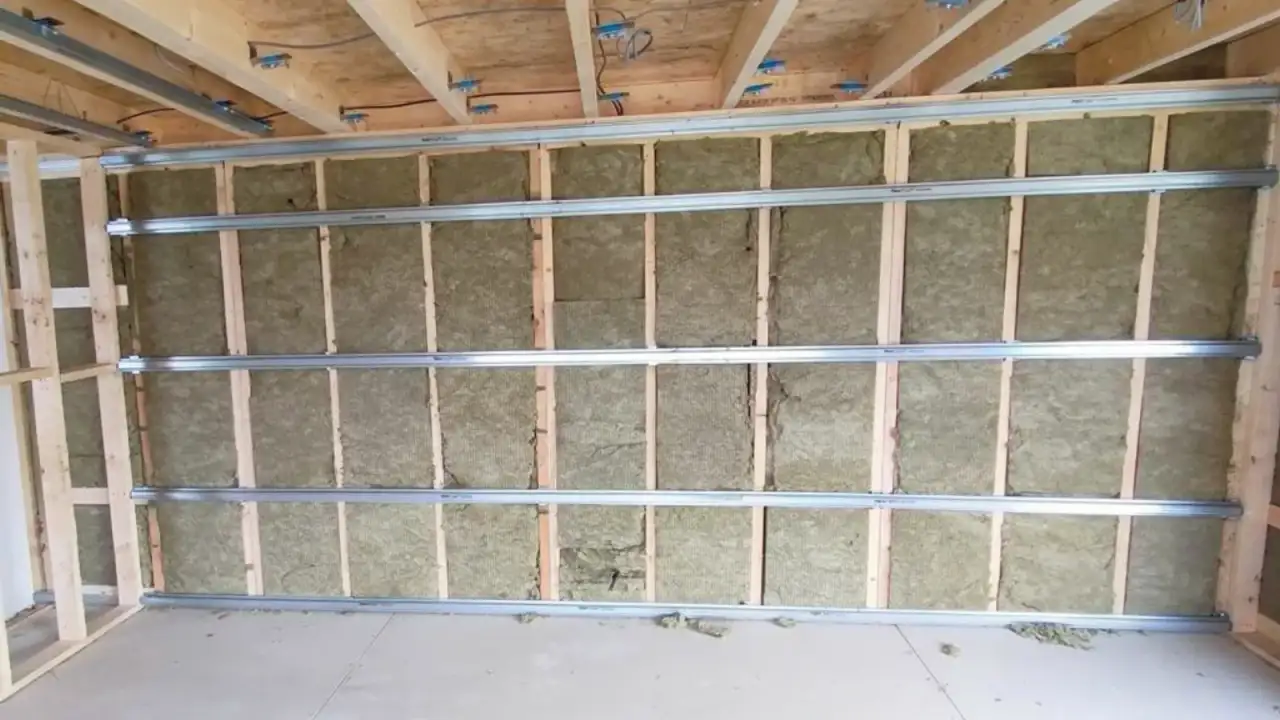
Sound gets through a wall in two completely different ways, and they need different fixes. Airborne noise, voices, TV, and music, travels through the air and vibrates the wall across to the other side, and you fight it with mass and by decoupling the drywall from the framing so the vibration cannot pass straight through. Impact, or structure-borne, noise, footsteps, dropped objects, the bass you feel as much as hear, travels through the building’s structure itself, which is why it is so common between floors in a converted multi-family or a stacked condo, and you fight that with resilient mounting and decoupling. A single “soundproof” board addresses a bit of the airborne side and none of the rest, which is exactly why the person who buys one board and hangs it is underwhelmed. The performance lives in the assembly: sound-damping board like QuietRock, plus resilient channel or isolation clips to decouple, plus mineral wool in the cavity, plus added mass from extra layers or a mass-loaded barrier, plus acoustic sealing everywhere.
Party walls, code, and what “quiet” really means
For condos and multi-family, there is a number worth knowing. New party-wall construction in Connecticut is built to a sound minimum of roughly STC 50 under the state building code, but a code minimum is not the same as a quiet home, and plenty of Hartford’s older converted houses and mid-century condos predate that standard entirely. STC, the Sound Transmission Class, is the single figure that describes how much airborne sound a wall stops, and small numbers matter a lot: the gap between a builder-grade wall and a properly decoupled, mass-loaded assembly is the difference between hearing the neighbor’s conversation clearly and hearing an occasional muffled murmur you stop noticing. The same logic runs the other way in the downtown office-to-apartment conversions, where the demising walls between brand-new units are the one chance to build sound and fire performance in before anyone moves in. We set an STC target for your wall and build only the assembly that goal needs, rather than gold-plating every surface in the room.
Flanking paths: the detail that makes or breaks it
The most common reason a soundproofing job underperforms is not the wall, it is everything around the wall. Sound behaves like water and finds the gaps. Back-to-back outlet and switch boxes, the gap under a door, ductwork, recessed lights, and unsealed perimeter edges all let sound flank around even a beautifully built assembly. Sealing and detailing those penetrations with acoustic sealant is unglamorous and completely decisive, and it is where a careful installer separates from someone who just hangs heavy board. Hartford Elite Drywall addresses the flanking paths as part of the job, because a wall is only ever as quiet as its weakest leak.
Honest expectations, and where it pays off
We tell you up front what soundproofing does and does not do. It substantially reduces transmission, often enough to turn an intelligible conversation next door into a muffled murmur you stop noticing, but it rarely produces total silence, and anyone promising silence is overselling. We set a realistic STC target for your room and budget and build only the assembly that goal needs. For a hybrid worker’s home office or a media room, that is a one-time investment in being able to actually use the space. For a Hartford landlord or property manager, soundproofing the worst party walls is a one-time cost weighed against repeated turnover and noise complaints, and we can target only the problem walls rather than the whole building. Either way, the wall ends up looking like any other wall, finished, painted, and finally quiet.
Materials & standards
Products & materials we use
- QuietRock (sound-damping drywall)
- Resilient channel and sound isolation clips (e.g., RSIC)
- Green Glue-type damping compound
- Mass-loaded vinyl (added-mass barrier)
- Mineral wool acoustic insulation (Rockwool Safe'n'Sound)
- Acoustic sealant
Standards & codes we work to
- STC (Sound Transmission Class)
- IIC (Impact Insulation Class, for floors and ceilings)
- GA-216 (Level 4 finish)
- 2022 CT State Building Code (party-wall and multi-family sound minimums, roughly STC 50)
What the terms mean
- Airborne versus structure-borne (impact) noise
- Decoupling and resilient mounting
- Mass, added layers, mass-loaded assemblies
- Cavity insulation
- Flanking paths and acoustic sealing
- Demising wall (between converted units)
- Overlay versus full assembly
Options & variants
| Option | When it applies | Cost |
|---|---|---|
| Single-layer sound-damping upgrade | Modest improvement on one existing wall | Lower — board overlay plus sealing |
| Resilient channel / isolation clip decoupling | Stopping structure-borne and impact noise | Mid — decoupling system plus board |
| Full STC assembly (mass + decouple + insulate + seal) | Media rooms, condo party walls, serious isolation | Higher — complete system |
| Ceiling soundproofing | Footfall and impact noise between floors in multi-family | Higher — ceiling decoupling is more labor |
| QuietRock overlay (occupied, minimal demo) | Adding isolation without opening the wall | Mid — overlay approach |
| New-build or conversion soundproof wall | Open framing during renovation or a demising wall in an office-to-apartment conversion | Efficient — done before close-up |
What affects cost
- • Target performance, the STC goal — a modest reduction versus true media-room isolation
- • Walls versus ceilings — ceiling and impact soundproofing is more labor than a wall
- • Assembly chosen — board-only versus a full decouple, mass, insulate, and seal system
- • Open framing versus a closed wall — doing it during a renovation is far cheaper than retrofitting a sealed wall
- • Area — square footage and the number of surfaces treated
- • Penetrations and flanking paths — outlets, doors, ducts, and edge gaps bypass the wall and must be sealed or the rating is lost
- • Insulation needs — adding or upgrading mineral wool in the cavity
- • Access and occupancy — overlay work in an occupied unit adds protection and containment
Price ranges
Low end
$2,500–$3,200
Single wall, sound-damping overlay plus sealing, a modest improvement.
Typical
$3,200–$4,200
One room or one party wall, a decouple, mass, insulate, and seal assembly.
High end
$4,200–$5,000+
Media room or full isolation, walls plus ceiling, multi-layer system, impact noise.
What to expect
- 1
Listen and diagnose
Hartford Elite Drywall identifies what kind of noise you are fighting, airborne voices and TV versus structure-borne footfall and impact, and where it is coming through, because the fix differs. We set a realistic STC goal and explain what is achievable in your room.
- 2
Recommend the assembly
Based on the noise type and the budget, we recommend the right system: sound-damping board, decoupling with resilient channel or clips, added mass, cavity insulation, and acoustic sealing, only what the goal needs.
- 3
Address the flanking paths
Outlets, switches, doors, ducts, and edge gaps let sound bypass even a great wall. We seal and detail these, because skipping them is the single most common reason soundproofing underperforms.
- 4
Build the assembly
We install the chosen system: decoupling hardware, mineral wool insulation, sound-damping board or added layers, with acoustic sealant at every perimeter and penetration.
- 5
Tape and finish
Finished to a GA-216 Level 4, paint-ready, and looking like any other wall in the house.
- 6
Hand off with honest expectations
We tell you plainly what to expect, a clear and audible reduction, not silence, and we point out any remaining weak point such as a hollow-core door.
When this isn’t the right call
- If the noise is mostly through a door or window → a solid-core door or a window treatment may do more than wall work, and we will point you there.
- If you expect total silence → soundproofing reduces transmission a lot but rarely eliminates it, and we will reset that expectation honestly before you spend.
- If it is a small repair, not an acoustic upgrade → see Drywall Repair & Patching.
- If the real issue is HVAC or duct-borne noise → that is a mechanical fix, not a drywall one.
- If a whole room is being newly built or a unit is being converted → we integrate the soundproofing into the new walls efficiently, see Drywall Installation & Hanging.
Frequently asked questions
Does soundproof drywall actually work, or is it a gimmick? +
It works when it is done as a system, not a single product. Swapping in one "soundproof" board alone gives a modest result and disappoints people. A proper assembly, decoupling the drywall from the framing, adding mass, insulating the cavity, and sealing every edge and penetration, gives a real, audible reduction. The difference is whether you build the assembly or just buy the board.
What is the difference between airborne and impact noise? +
Airborne noise is voices, TV, and music traveling through the air and the wall. Impact, or structure-borne, noise is footsteps, dropped objects, and vibration traveling through the building structure itself, common between floors in a converted multi-family or a stacked-condo building. They need different fixes: mass and decoupling for airborne, decoupling and resilient mounting for impact. We diagnose which one you have before recommending an assembly.
What is QuietRock and do I need it? +
QuietRock is a sound-damping drywall, multiple layers with a viscoelastic core that turns sound energy into heat. It is an effective part of many assemblies, especially where you cannot open the wall, but it is strongest combined with decoupling and sealing. We use it where it earns its place rather than as a one-size answer.
My condo or apartment shares a party wall. Does it already meet a code? +
New multi-family construction in Connecticut is built to a party-wall sound minimum of roughly STC 50 under the state building code, but a minimum is not the same as quiet, and many of Hartford's older converted homes and mid-century condos predate that standard entirely. We can measure or estimate where your wall stands and build it up past the minimum to where you actually stop hearing the neighbor.
Will this make my home office completely silent? +
No, and anyone who promises that is overselling. Good soundproofing substantially reduces what comes through, often enough that a conversation next door becomes an unintelligible murmur, but it rarely eliminates sound entirely. We set a realistic target and tell you what you will actually experience on your next call.
I am a landlord with noise complaints between units. Is this worth it? +
Often, yes. Hartford's converted multi-family and rental stock are known for sound transfer, and noise is a real driver of tenant churn. Soundproofing the worst party walls is a one-time cost against repeated turnover and complaints, and we can target only the problem walls rather than the whole building.
Can you do it without tearing my wall apart? +
Often, yes. An overlay approach adds a decoupled, sound-damping layer over the existing wall with full sealing, which avoids a complete tear-out. It is slightly less effective than a full assembly in open framing but far less invasive, and it is a good fit for occupied homes, condos, and rented units.