
Signs you need this
- • Brown rings or water stains spreading across the ceiling
- • A ceiling section that is bowing, bellying, or sagging away from the framing
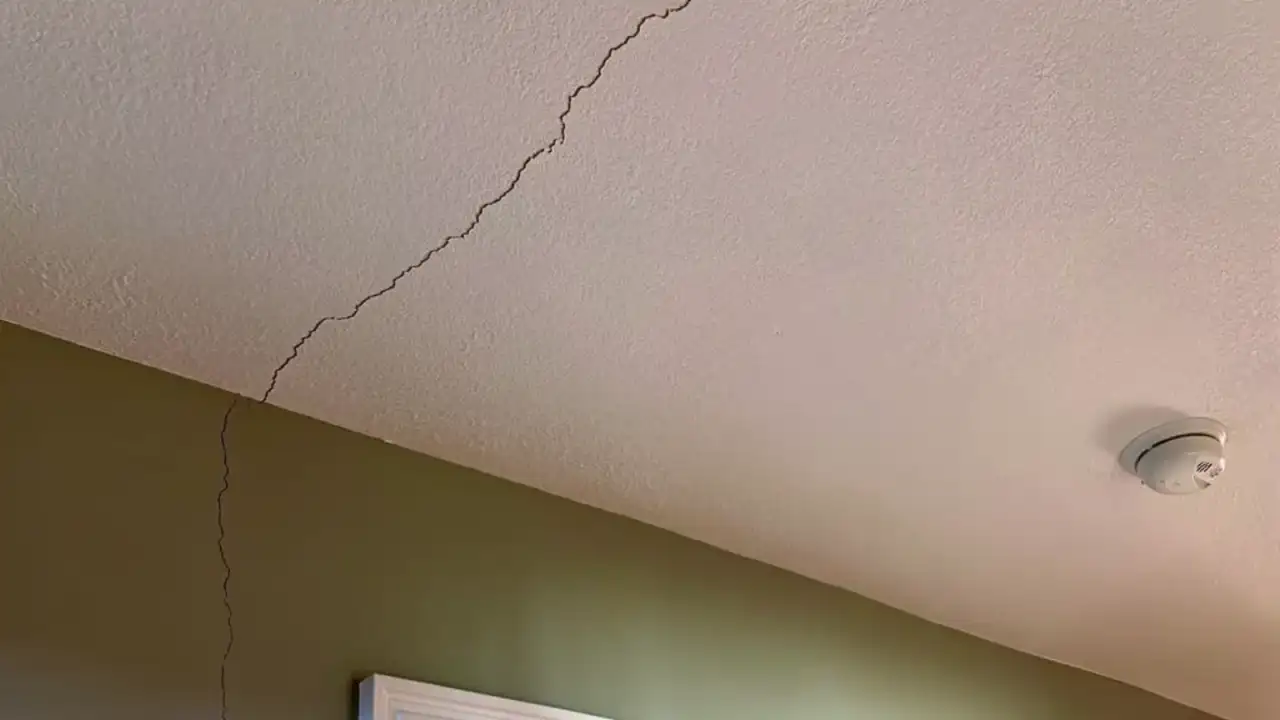
- • Long cracks running across a plaster ceiling or along the wall-ceiling joint
- • Fine cracks in a grid or map pattern on an old plaster ceiling (keys letting go)
- • Paint or plaster flaking, bubbling, or dropping bits of grit onto the floor
- • A hole or damaged patch from a removed light fixture, attic hatch, or an earlier repair
- • A ceiling that reads as a different color or texture where someone patched it before
Ceiling Repair in Hartford
Ceilings are the most punishing surface in the house to repair, for two reasons. The first is light: a ceiling catches raking light from windows and fixtures that exposes every ripple, seam, and mismatched texture a wall would forgive, so a ceiling repair has to be genuinely good to disappear. The second is that a ceiling problem is usually a symptom of something above it, a roof or plumbing leak, mold in the cavity, or, in Hartford’s older neighborhoods, plaster that is losing its grip on the lath. So good ceiling repair starts not with mud and tape but with figuring out what you are actually looking at, because the fix for a hairline crack and the fix for a water-saturated sag are not remotely the same job.
Stains, and why painting over them fails
A brown ring on the ceiling is the single most common ceiling call, and painting straight over it is the single most common mistake. Water stains bleed through ordinary paint and ghost back within days, so they have to be sealed with a stain-blocking primer first. But the stain is only the cosmetic question. The real one is whether the material behind it is still sound. In Hartford, ceiling stains cluster around roof leaks and ice dams on older homes and around plumbing runs in stacked multi-family units, and if the ceiling got truly wet, the drywall’s paper face or the plaster is compromised and the section needs replacing, not sealing, with a mold check behind it. That is a water-damage repair rather than a paint-and-seal. The company confirms the leak that caused it is actually resolved before closing anything up, because finishing a ceiling over an unsolved leak just buys the same repair again.
Sagging plaster is a safety issue, not just a look
When a ceiling sags, it is holding weight it was never meant to. In a modern ceiling that usually means drywall pulling away from the joists or board weighted down by water. In Hartford’s pre-war housing, the West End, Asylum Hill, Frog Hollow, Parkville, and Barry Square, where much of the stock predates 1940, it means something more specific: plaster-on-lath ceilings that have lost their keys. When the original plaster was troweled on, it squeezed through the gaps in the wood lath and formed little plugs, called keys, that hold the ceiling up. A century of vibration, heat, and moisture breaks those keys, and the plaster starts to belly down under its own weight until it can fail in a sheet. That is not a cosmetic problem to schedule for next month; it is a stay-out-from-under-it issue until it is assessed. The company finds the cause of the sag and handles it accordingly: re-securing or replacing pulled drywall, re-securing sagging plaster to the lath or cutting it back to sound material, and flagging the rare case where the joists themselves need a structural look. Skinning a fresh coat over a sagging ceiling is the wrong answer to a real problem.
Cracks in old ceilings, and the ones that keep coming back
Hartford’s older ceilings crack, and most of it is ordinary. A crack at the wall-ceiling joint is usually seasonal movement as the framing expands and contracts with New England’s freeze-thaw swings. A map of fine cracks across a plaster field is the plaster flexing on tired lath. The mistake that guarantees a repeat is smearing filler over the top, because the crack is moving and the filler is not. The company cuts the crack out, re-tapes the joint, or re-secures the plaster so the repair holds through the next season instead of reopening. When a crack is widening, or it comes paired with a sag, that is the signal to look closer before finishing rather than patch and hope.
The cosmetic cases, done so they vanish
Plenty of ceiling repairs are genuinely cosmetic: a hole from a removed light fixture, an attic-hatch tear-out, a failed prior patch, a stain over a leak that is long fixed. Landlords across Hartford, East Hartford, and New Britain hit these constantly on unit turnovers, where the ceiling has to clear a walkthrough on a schedule. There the craft is all in the finish. Because of that raking light, the patch has to be feathered flatter and the texture matched more carefully than it would on a wall, then primed so it does not flash. If the ceiling carries a texture, the company samples and matches it; if it is a popcorn ceiling, and the home dates to before the 1980s, the popcorn is tested for asbestos before any removal. The result, whatever the cause, is a ceiling that reads as one uniform surface instead of a map of everything that has happened to it.
Materials & standards
Products & materials we use
- Stain-blocking primer (shellac or oil-based for water stains)
- USG Sheetrock, National Gypsum Gold Bond, CertainTeed board and compounds
- Setting-type (hot mud) compound
- Blueboard and veneer plaster (for plaster-ceiling patching)
- Ceiling-texture products (for matching)
Standards & codes we work to
- GA-214 / GA-216 (Level 4 finish)
- 2022 CT State Building Code (permit triggers on structural or fire-separation work)
- CT DCP Home Improvement Contractor (HIC) registration
- Hartford Building Department (permit only if structural)
What the terms mean
- Stain sealing and bleed-through
- Plaster keys and lath; re-securing plaster
- Sagging and re-securing drywall to joists
- Wall-ceiling joint crack
- Texture match; raking light; feathering
- Backing at section replacement
Options & variants
| Option | When it applies | Cost |
|---|---|---|
| Stain seal + finish | Leak resolved, board or plaster sound, stain only | Lower: seal, finish, texture |
| Section replacement | Water-damaged or holed drywall ceiling section | Mid |
| Sagging drywall re-secure | Panel pulled from the joists or weighted by water | Mid to higher |
| Plaster ceiling re-secure / repair | Pre-war plaster sagging or cracking off the lath | Mid to higher |
| Crack repair (ceiling / joint) | Cracks across the field or at the wall-ceiling joint | Low to mid |
| Textured ceiling repair | Matching an existing ceiling texture into the patch | Adds a texture step |
| Full ceiling refinish | Widespread damage; skim smooth or re-textured | Higher (see Skim / Popcorn) |
What affects cost
- • Cause: a cosmetic stain versus water, mold, plaster failure, or a structural sag drives the whole scope
- • Ceiling type: a plaster-on-lath ceiling is more involved to re-secure and blend than modern drywall
- • Area: a small patch versus a full section or an entire room ceiling
- • Sagging or detachment: re-securing plaster to the lath or drywall to the joists adds labor
- • Texture: matching an existing ceiling texture, or removing a popcorn finish first, adds steps
- • Height and access: high, stairwell, or vaulted ceilings need staging
- • Stain sealing: water stains need a stain-blocking primer so they do not bleed back through
- • Occupied room: overhead work needs floor and furniture protection and containment
Price ranges
Low end
$300–$500
Stain seal + finish, or a small patch, texture-matched and primed
Typical
$500–$900
Section repair, crack repair, or a modest sag fix, finished and matched
High end
$900–$1,500+
Larger section, sagging plaster re-secure, textured matching, high or vaulted ceilings
What to expect
- 1
Assess the cause
The company determines whether the ceiling issue is cosmetic, water-related, plaster failure, or structural. A stain means confirming the leak is resolved; a sag means checking whether it is water weight, pulled fasteners, or old plaster losing its keys to the lath.
- 2
Make safe (if sagging)
A genuinely sagging or saturated ceiling is handled carefully to avoid a collapse, and nothing gets closed up over an active or unresolved problem.
- 3
Repair by cause
Stain only: seal with a stain-blocking primer and finish. Damaged drywall: cut out and replace the section, backed properly. Sagging drywall: re-secure to the joists or replace. Sagging plaster: re-secure to the lath or cut back to sound material. Cracks: cut out and re-tape the joint.
- 4
Tape and finish
Feathered wide, built up in thin coats, sanded smooth so the patch disappears under overhead light.
- 5
Texture match
The existing ceiling texture is sampled and matched, or, if it is a popcorn ceiling the owner wants gone, it is routed to removal.
- 6
Prime and hand off
Primed paint-ready, with water stains sealed so they do not ghost back through the new paint.
When this isn’t the right call
- If there is an active roof or plumbing leak, resolve it first. See: Water Damage Drywall Repair.
- If mold is present behind or above the ceiling, it gets addressed first. See: Mold Drywall Replacement.
- If it is a plaster ceiling failing across a whole room, the plaster approach fits better. See: Plaster Repair & Conversion.
- If it is a popcorn ceiling the owner wants removed rather than patched. See: Popcorn Ceiling Removal.
- If the ceiling is structurally failing at the joists, it needs a framing or structural look first.
Frequently asked questions
My ceiling has a water stain but the leak is fixed. Can you just paint over it? +
Painting over a water stain without sealing it first means the stain bleeds right back through, usually within days. The company seals it with a stain-blocking primer and confirms the material underneath is sound, then finishes. If the ceiling got truly wet, the board or plaster needs replacing rather than sealing, so it gets checked before anyone decides. In older Hartford homes a stubborn ceiling stain often traces to an ice dam or a slow roof leak, so confirming the leak is actually done matters.
My plaster ceiling is sagging. Is that dangerous? +
Treat it as urgent and keep people from underneath it. A sagging plaster ceiling is holding weight it should not, and in a pre-war home the plaster has usually lost its keys, the little plugs that grip the wood lath, so it can let go in a sheet. The company assesses what is causing the sag and re-secures or cuts back to sound material safely, instead of skimming over a ceiling that is on its way down.
Can you match my textured ceiling? +
Yes. The company samples and matches the existing ceiling texture so the repair blends in. If it is a popcorn ceiling you would rather be rid of, that is a removal job the company also does, and on homes built before the 1980s the popcorn is tested for asbestos before any removal.
Why do ceiling repairs show more than wall repairs? +
Light. Ceilings catch raking light from windows and fixtures that reveals every ripple, seam, and mismatched texture a wall would forgive, so a ceiling patch has to be flatter and better matched than a wall patch to disappear. That is why the company feathers wide, matches texture, and primes: a quick smear reads badly overhead.
My old ceiling has a crack that keeps coming back. Can it be fixed for good? +
Usually. A recurring crack at the wall-ceiling joint or across a plaster field is normal seasonal movement or a plaster ceiling flexing on tired lath. The company cuts the crack out and re-tapes or re-secures it rather than smearing filler over the top, which is what lets it return. If the crack is widening or comes with a sag, the company looks closer before finishing.
I'm a landlord turning a unit. Can you clear ceiling stains and cracks fast? +
Yes. Ceiling stains and cracks are common turnover items in Hartford's rental stock, and the company handles them at a security-deposit-grade finish on a turn schedule: seal the stains so they do not reappear, cut and re-tape the cracks, texture-match, and prime paint-ready for the next tenant.
Do I need to move out or cover everything? +
No, but overhead work drops debris, so the company protects floors and furniture and contains the area. You can stay in the home for a typical ceiling repair.