
Signs you need this
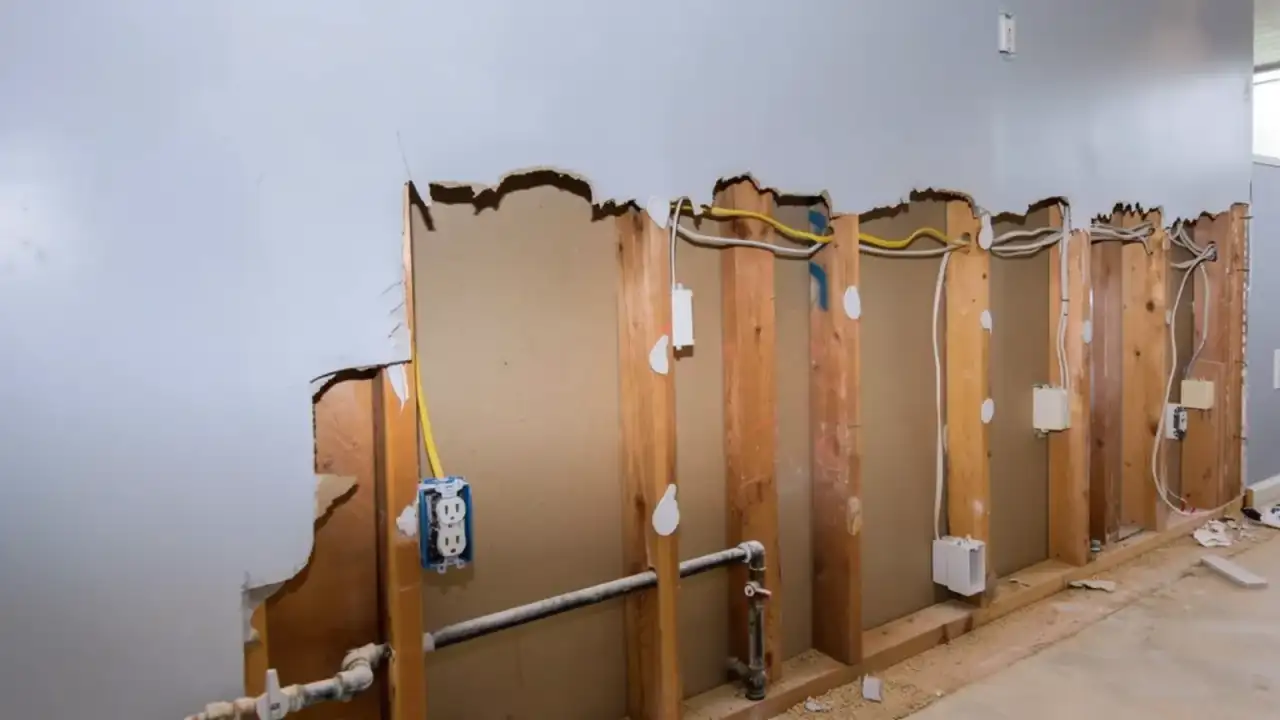
- • A remodel or gut renovation needs the existing walls and ceilings torn out before anything new goes up
- • Damaged, moldy, or water-soaked drywall that has to come out
- • Old plaster-on-lath that is cracked, sagging, or bulging past repair and the owner wants it gone and replaced with drywall
- • Walls being opened for new wiring, plumbing, or a layout change
- • A room or a whole floor being stripped to the studs
- • Old paneling, furring, or a dropped ceiling to remove before a clean install
Drywall Removal and Demolition in Hartford
Demolition looks like the easy, mindless part of a renovation, swing a hammer and fill a dumpster, and that impression is exactly why it goes wrong. Done carelessly, tearing out walls and ceilings drives fine dust through the entire house, gouges the framing and finishes that are supposed to stay, and, worst of all, can disturb asbestos or lead hiding in old materials. Done properly it is controlled: hazards checked first, dust contained, what stays protected, and debris hauled cleanly away so the rebuild starts from a sound base. Across Hartford, where a large share of the housing is old enough to hide a few surprises, that controlled approach is the difference between a clean start and a contaminated, damaged mess.
Test before you tear into old materials
This is the part most people do not think about, and the part that matters most in a city with this much pre-1940 housing. In that era the joint compound on drywall seams and some wall and ceiling textures could contain asbestos, and paint from before 1978 often contains lead. Intact, those materials are generally not a hazard. It is demolition, the act of breaking and sanding them, that releases fibers and dust into the air. So in older Frog Hollow, West End, Asylum Hill, and Parkville homes we recommend testing suspect materials before tearing into them rather than gambling, and if a test comes back positive, a CT-licensed abatement contractor handles that material and we resume the non-hazardous removal after clearance. Tearing out an old textured ceiling blind is precisely the wrong move, and it is a common one.
Taking out lath-and-plaster is a different job
A lot of Hartford removal is not drywall at all. The original walls in the pre-war neighborhoods are plaster-on-lath: a scratch and finish coat of plaster keyed onto thin wood lath nailed across the studs. Taking it out is heavier, slower, and much dustier than pulling modern board, and it produces far more debris by volume, so a room that would fill a small container in drywall fills a large one in plaster. We plan the containment and the haul-away around that reality, and we take the plaster and lath down in a controlled sequence so the framing behind it stays sound and reusable. When an owner has decided the plaster is past patching, this tear-out is usually the front end of a plaster-to-drywall rebuild we handle on the same schedule.
Clean, controlled removal
Assuming the materials are clear, the job is about control. We figure out what is behind the wall first, the wiring, plumbing, and HVAC that have to keep working, so removal happens around what stays live, and we confirm we are only taking out non-structural finish. We seal off the work area and protect floors, doorways, and adjacent rooms, because containing the dust is most of what makes demo clean, and then we take the board, lath, and fasteners down deliberately, leaving the framing intact and the surrounding finishes undamaged. Selective removal, opening one wall for an electrician or a plumber, gets the same care, because a ragged hole means more repair later.
Hauled away, ready for what’s next
The job is not done when the wall is down; it is done when the debris is gone and the space is ready. Removal includes hauling and disposing of the demo material, so you are not left living around a pile of broken gypsum or plaster, and we sweep the space and leave it prepped for the next phase. For a lot of projects that next phase is us, and demo and rebuild as one job on one schedule keeps it simple, since the crew that opened the wall is the one that closes it back up. Larger scopes and structural or fire-separation changes can trigger a permit under the 2022 CT State Building Code through the City of Hartford Building Department, and we work to that where it applies. Whether it is a single wall or a whole-house gut, the standard is the same: check for hazards, contain the mess, protect what stays, and leave a clean, sound starting point.
Materials & standards
Products & materials we use
- Negative-air and containment supplies for dust control
Standards & codes we work to
- EPA / CT DEEP asbestos regulations; NESHAP (ACM)
- EPA RRP Rule (lead-safe, pre-1978)
- CT-licensed asbestos abatement requirement (ACM positive)
- 2022 CT State Building Code (permit triggers on structural and larger scopes)
- City of Hartford Building Department (permit for structural or major renovation)
What the terms mean
- Selective demolition / strip-to-studs / gut
- Lath-and-plaster tear-out
- Containment / dust control
- ACM (asbestos-containing material) testing
- Haul-away / disposal
- Non-structural vs. structural wall
Options & variants
| Option | When it applies | Cost |
|---|---|---|
| Selective drywall removal | Opening specific walls or sections for trades or a layout change | Lower — targeted |
| Full room strip-to-studs | Gut renovation of a single room | Mid |
| Whole-house or whole-floor gut | Major renovation or adaptive-reuse-style rebuild | Higher by area |
| Lath-and-plaster tear-out | Pre-war home taking out failing plaster for a drywall rebuild | Higher — heavy, dusty, more debris volume |
| Damage-driven removal | Water, mold, or fire-affected board out | Mid; routes to repair scope |
| Removal + haul-away | Debris disposal included | Adds disposal cost |
| Hazmat-aware (test-first) | Pre-1980 materials suspected of asbestos or lead | Testing and abatement coordination |
What affects cost
- • Area and scope — selective opening versus a full room or whole-house gut
- • Material — modern drywall is quick; original lath-and-plaster is heavier, dustier, and much slower to take down and clean up
- • Ceiling versus wall — overhead removal is more labor and a bigger mess
- • Debris volume and disposal — haul-away and dump fees scale with volume, and plaster fills a container fast
- • Hazardous materials — suspected asbestos or lead requires testing and, if positive, a licensed abatement contractor (a separate cost)
- • Containment needs — occupied homes need more dust control and protection than a vacant gut
- • Access — stairs, upper floors of a Frog Hollow multi-family, and tight downtown spaces add labor
- • What's behind the wall — careful work around live wiring and plumbing that stays
- • Layers — drywall installed over old plaster, or several layers, add time
Price ranges
Low end
$500–$800
Selective removal of a wall or section, contained, debris out
Typical
$800–$1,500
Room strip-to-studs, protected and hauled away
High end
$1,500–$2,500+
Large or whole-house gut, ceilings, lath-and-plaster, high debris volume
What to expect
- 1
Assess and check for hazards
We look at the scope and the age of the materials. In pre-1980 Hartford homes, old joint compound and textures can contain asbestos and pre-1978 paint can contain lead, so we recommend testing before tearing into suspect materials rather than disturbing them blind.
- 2
Plan around what stays
We identify the wiring, plumbing, and HVAC behind the walls so removal works around what stays live, and confirm which walls are non-structural before anything comes down.
- 3
Contain and protect
Dust containment and protection for floors, doorways, adjacent rooms, and anything that stays. Demolition is the dustiest phase of any job, and with old plaster it is dustier still, so containment is most of what makes it clean.
- 4
Remove
Board, lath, and fasteners taken down in a controlled way that leaves the framing intact and does not tear up the surfaces that remain.
- 5
Hazmat routing (if needed)
If a test is positive, a CT-licensed abatement contractor handles that material and we resume the non-hazardous removal after clearance.
- 6
Haul away and prep
Debris removed and disposed of, the space swept and left ready for the next phase, whether that is framing, the trades, or our own rebuild.
When this isn’t the right call
- If asbestos or lead is confirmed → a CT-licensed abatement contractor must remove that material; we coordinate and resume after clearance.
- If the wall is structural → structural removal needs engineering and framing, not just finish demolition.
- If it is localized damage you want repaired → you may not need full removal. See: Drywall Repair & Patching.
- If the plaster is cracked but sound → skim-coating or a plaster repair may save the wall instead of a full tear-out. See: Plaster Repair & Plaster-to-Drywall Conversion.
- If it is water or mold specific → those scopes include the right removal plus rebuild. See: Water Damage / Mold Drywall Replacement.
- If you just need debris hauled with no demo → that is a junk-removal service, though we haul our own demo debris.
Frequently asked questions
Could my old walls have asbestos? +
It is possible in homes built or finished before roughly 1980, and a lot of Hartford's housing is older than that. Old joint compound and some textures contained asbestos, and pre-1978 paint can contain lead. That is why we recommend testing before tearing into suspect materials rather than disturbing them blind, because demolition is exactly what makes those materials dangerous. If a test is positive, a CT-licensed abatement contractor handles that material and we resume after clearance.
My house is old plaster, not drywall. Do you take that out too? +
Yes. Original lath-and-plaster is common in Frog Hollow, the West End, Asylum Hill, and Parkville, and taking it out is a bigger job than removing modern drywall. Plaster is heavier, it makes far more dust, and it fills a container fast, so we plan the containment and the haul-away around that. Many of these jobs are a plaster tear-out followed by a drywall rebuild on the same schedule.
Will demo make a huge mess in the rest of my house? +
Not if it is contained, which is most of doing it right. We seal off the work area, protect floors and adjacent rooms, and control dust so it does not migrate through the house. Then we haul the debris away and leave the space swept and ready for the next phase.
Do you haul the debris away? +
Yes. Removal includes hauling and disposing of the demo debris, so you are not left with a pile of broken drywall or plaster to deal with.
Can you remove just one wall's drywall for my electrician or plumber? +
Yes. Selective removal to open specific walls or sections for trade work is common. We identify what is live behind the wall, open it cleanly, and protect the surrounding finishes so the repair afterward is straightforward.
Will you damage the framing or the walls that are staying? +
That is the difference between careful demo and reckless demo. We remove board, lath, and fasteners in a controlled way that leaves the framing intact and avoids tearing up adjacent surfaces that remain, so the rebuild starts from a clean, sound base.
Can you do the removal and the new drywall? +
Yes. Many projects are demo plus rebuild as one job, which keeps it on one schedule and one crew. See our installation and plaster-conversion pages for the rebuild scope.