
Who this is for
- General contractors prequalified through Connecticut DAS who bid and run public-building work: state agency offices, courthouses, and administrative fit-outs across the Capital Region
- Municipal facilities and public-works directors in Hartford and the surrounding towns who maintain and renovate town halls, libraries, senior centers, and police and fire buildings
- Construction managers and owner's representatives on state capital-improvement projects who need a drywall sub already fluent in prevailing wage, certified payroll, and DAS submittals
- Facilities managers at occupied state office buildings who phase renovations around a working public agency that cannot close its counters
- Judicial and public-safety project managers building or renovating courtrooms, holding areas, and secure corridors where durability and separation are part of the program
Government and Municipal Drywall in Hartford, the Capital City
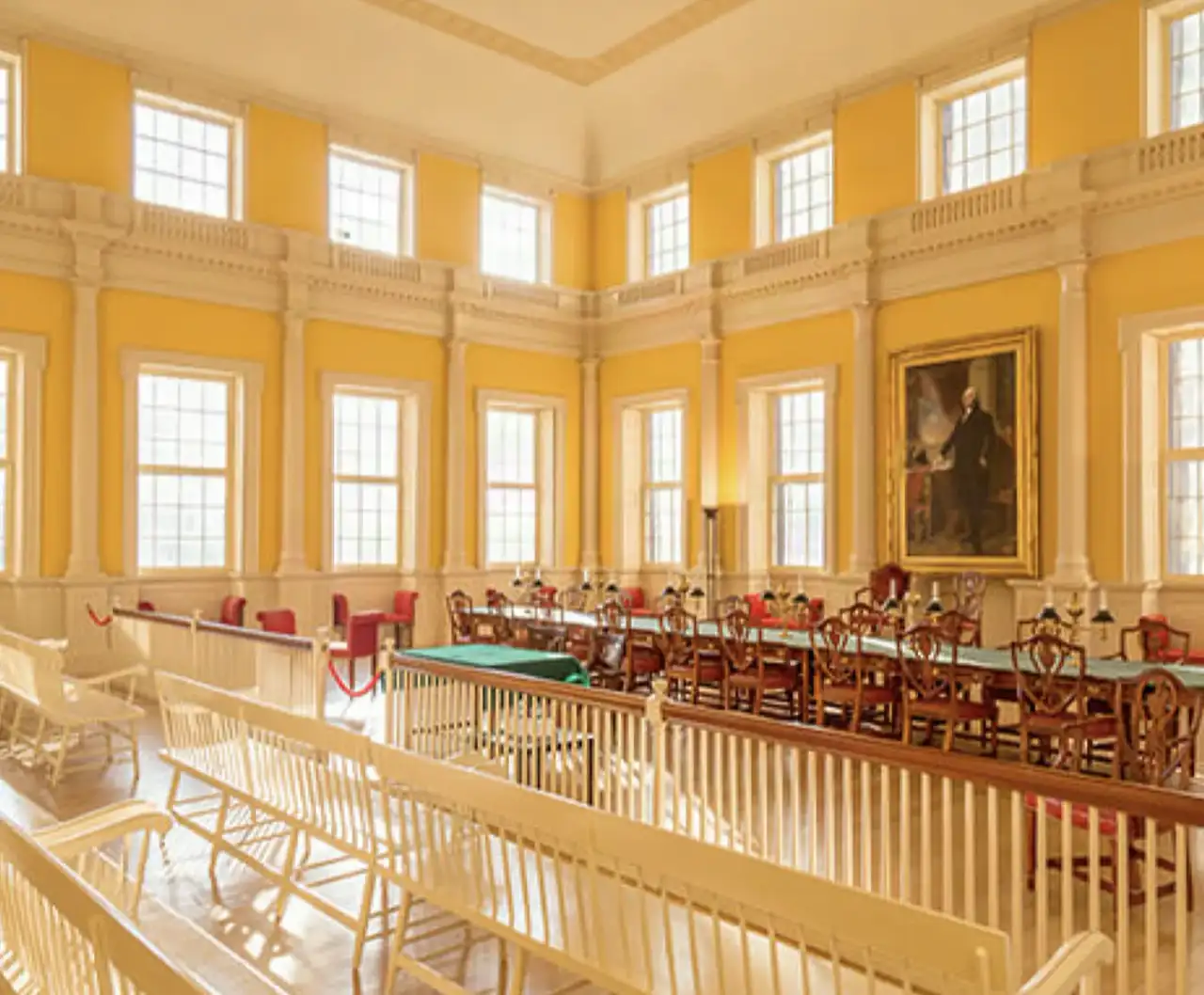
Hartford is the seat of Connecticut government, and that puts a concentration of public buildings inside a few square miles that no other city in the state comes close to. The Capitol Avenue corridor alone carries the State Capitol, the Legislative Office Building, the State Office Building at 165 Capitol Avenue, the Connecticut Supreme Court, and the State Library. The consolidated state offices sit at 450 Columbus Boulevard, the judicial district courthouses run along Washington and Lafayette Streets, and Hartford City Hall anchors 550 Main Street. Add the town halls, public-works garages, senior centers, and public-safety buildings across West Hartford, Wethersfield, Newington, Manchester, and the rest of Hartford County, and there is public-sector interior work bidding somewhere in the region in most months of the year. That work is not office drywall with a government logo on the door. It carries a procurement process, a wage law, and an occupancy that a private tenant improvement never touches.
Government and municipal drywall is commercial interior wall and ceiling work performed inside publicly owned buildings under public-contracting rules. The framing, board, taping, and finishing are standard commercial drywall. What changes is everything around the trowel: the job is won through competitive public bid, built to prevailing wage with certified payroll, sequenced around an agency that keeps serving the public, and often finished to a durability and separation standard that a courthouse or a busy service counter demands and a back office does not.
Public bidding, prevailing wage, and the paperwork that comes with it
A drywall sub on a state or municipal project is bidding a defined scope out of the bid documents and addenda, not ballparking from a walk-through. State building projects run through DAS, and prime and larger subcontractors carry DAS contractor prequalification. Public work in Connecticut is prevailing-wage work under the state statute, which means every hour on the job is paid at the published rate for the trade and documented on certified payroll submitted with each requisition. Payment and performance bonds, a certificate of insurance, and the project’s submittals and product data are part of getting on the job, not an afterthought. A crew that has never run certified payroll or read a public bid set will slow a GC down. The value a facilities director or public-works buyer is looking for is a sub who already speaks this language and does not need it explained.
Fire-rated corridors, shaft walls, and public occupancy
Public buildings are built around egress and separation. Exit corridors, stairwells, and vertical shafts require fire-rated assemblies built to the listed UL detail: Type X and Type C board on rated partitions under IBC Section 707, fire barriers under 708, and shaft enclosures under 713 built with gypsum shaft-liner panel where mechanical, elevator, and stair shafts run through occupied floors. Council chambers and courtrooms read as Assembly occupancy, holding and detention areas inside courthouses and police buildings read as Institutional, and each carries its own separation and rating requirements. State-owned buildings are inspected by the Office of the State Building Inspector rather than the local building official, so cover-up and rated assemblies are sequenced against state inspection, while municipal buildings answer to the town’s building department. Getting the right assembly built to the right listing, fire-stopped at every penetration, and inspected before cover is the core of the scope.
Durability, security, and phasing an occupied public building
Public corridors take abuse that a private office never sees. Service counters at a DMV or town hall, courthouse circulation, and agency lobbies get abuse- and impact-resistant board rated to ASTM C1629 (National Gypsum Hi-Abuse and Hi-Impact, CertainTeed Extreme, Georgia-Pacific DensArmor) so the walls survive years of public traffic instead of getting patched every season. Secure areas in courthouses and public-safety buildings carry their own construction requirements for separation and, in some assemblies, security-rated backing. The other constant is that the building usually cannot close. A permit office, a courthouse, or a police headquarters keeps operating while the renovation happens around it, so the work phases into nights, weekends, or segmented zones, each zone contained for dust and noise, completed, cleaned, and handed back before the next one opens. What the public buyer is buying is a sub who holds the schedule, keeps the counter open, and delivers a durable, code-compliant, fully documented interior.
Materials & standards
Products & materials we use
- National Gypsum Gold Bond Hi-Abuse / Hi-Impact (abuse/impact-resistant)
- CertainTeed Extreme Abuse / Impact board
- Georgia-Pacific DensArmor Plus abuse-resistant
- USG / National Gypsum Type X and Type C fire-rated board
- Gypsum shaft-liner panel (1" Type X liner for shaft-wall assemblies)
- Mold- and moisture-resistant board for below-grade and wet areas
Standards & codes we work to
- Connecticut State Building Code 2022 (based on IBC 2021)
- IBC Section 707 (fire partitions), 708 (fire barriers), 713 (shaft enclosures)
- ASTM C1629 (abuse/impact-resistant gypsum classification)
- GA-216 finishing standard (Level 4 / Level 5)
- UL fire resistance directory (listed assembly details)
- CGS 31-53 prevailing wage; CT DOL certified payroll (WH-347)
- CT DAS contractor prequalification; public competitive bidding
- Payment and performance bonds (public works)
- Office of the State Building Inspector (state-owned buildings); local building department (municipal buildings)
- IBC Business (B), Assembly (A-3), and Institutional (I-3) occupancy classifications
- ADA accessibility requirements in public buildings
What the terms mean
- Prevailing wage / certified payroll / requisition
- DAS prequalification / public bid documents / addenda / submittals
- Payment and performance bond / COI
- Fire-rated assembly / shaft wall / fire barrier / occupancy separation / fire-stopping
- Abuse-resistant vs. impact-resistant vs. standard board
- Phasing / occupied-building work / containment
- AHJ / Office of the State Building Inspector
The work this involves
The techniques that go into a project like this:
Frequently asked questions
Do you work prevailing-wage jobs and handle certified payroll? +
Yes. Public work in Connecticut is prevailing-wage work under CGS 31-53. We pay the published rate for the trade on every hour and submit certified payroll with each requisition, so the GC and the public owner have clean documentation through the whole job. This is standard practice for us, not something we have to learn on your project.
Are you set up to bid state and municipal work, including prequalification and bonding? +
Yes. We bid from the public bid documents and addenda, carry the required certificate of insurance, and provide payment and performance bonds where the project requires them. For state building projects we work within the DAS process and can be added to a prequalified GC's subcontractor roster.
Can you renovate an occupied government building without shutting it down? +
Yes. Most public work we do is phased around an agency that keeps serving the public. We segment the work into zones, contain each zone for dust and noise, work nights or weekends where the counter has to stay open, and clean and clear each area before we open the next. The phasing is planned with the GC and the facilities manager up front.
Do you build fire-rated corridors and shaft walls to the listed assembly? +
Yes. Rated corridors, fire barriers, and shaft enclosures are built to the exact UL listing under the Connecticut State Building Code (IBC 707, 708, and 713), fire-stopped at every penetration, and inspected before cover. We build shaft walls with gypsum liner panel and coordinate cover-up against the inspection so the assembly is verified, not assumed.
Can you meet the durability and security requirements in courthouses and public-safety buildings? +
Yes. High-traffic public corridors, service counters, and lobbies get abuse- and impact-resistant board rated to ASTM C1629 so they survive years of public use. Secure areas in courthouses and police buildings carry their own separation and backing requirements, and we build those assemblies to the drawings and the specified rating.
Who inspects the work, the state or the town? +
It depends on who owns the building. State-owned buildings are inspected by the Office of the State Building Inspector, and we sequence framing, fire-stopping, and cover inspections to that schedule. Municipal buildings answer to the local building department. Either way we plan cover-up so it never gets ahead of sign-off.